





Key takeaways
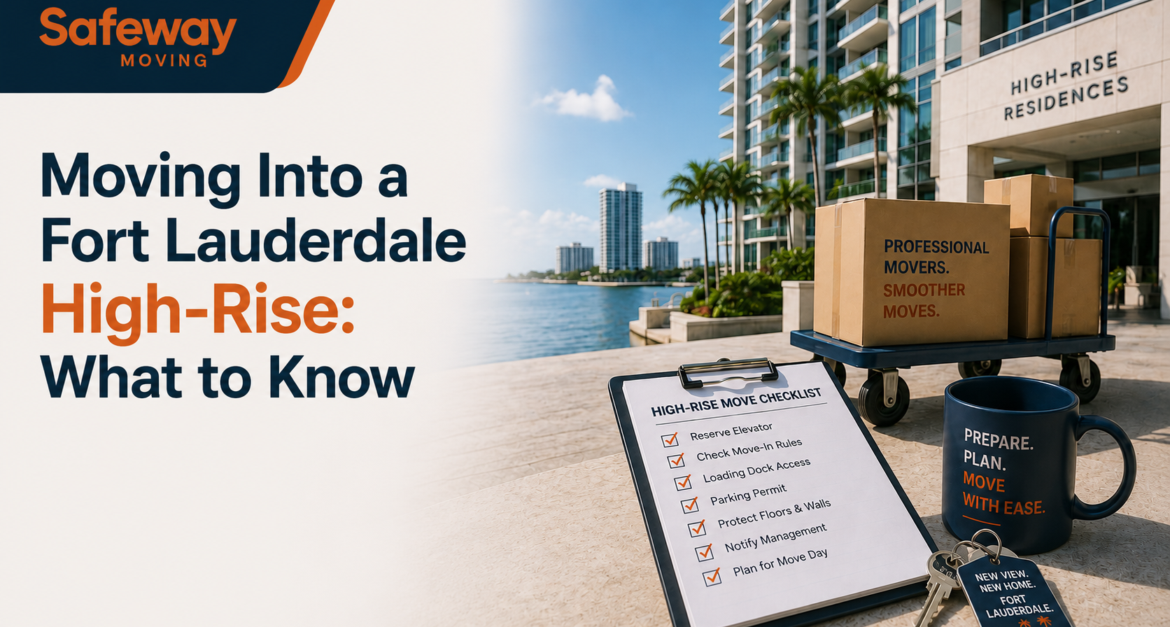
- Nearly every Fort Lauderdale high-rise requires a certificate of insurance naming the building before movers are allowed near the freight elevator.
- Elevator reservations usually need to be booked days in advance, and move-in windows are often restricted to specific hours or days of the week.
- Parking for the moving truck is rarely automatic; ask about loading zones and truck size restrictions before move day, not on arrival.
- Luxury buildings frequently charge a move-in fee or require a security deposit specifically for elevator use, separate from your regular security deposit.
- Confirming a building’s specific rules before booking your movers avoids the most common source of move-day delays in downtown Fort Lauderdale.
The Certificate of Insurance Is Not Optional
This is the single most common thing that trips people up. Nearly every high-rise building in Fort Lauderdale requires a certificate of insurance, or COI, naming the building or condo association before any moving crew is allowed to use the freight elevator or service entrance. This is not a formality; buildings enforce it strictly, and a moving crew showing up without one will typically be turned away at the front desk.
The COI has to come from your moving company’s insurance provider, listing specific coverage amounts the building requires, and naming the exact legal entity of the building or HOA. This paperwork usually takes a few business days to process, so it needs to be requested well before your move date, not the morning of. When you book movers for a high-rise move, tell them immediately that a COI is required and provide the building management’s exact requirements; most established moving companies handle this routinely and can turn it around quickly once they have the details.
Elevator Reservations: Book Early, Confirm the Window
Freight elevators in Fort Lauderdale high-rises are shared resources, and buildings ration access accordingly. Most require a reservation booked several days to a week in advance, and many restrict moving activity to specific windows, weekday mornings only, for example, or excluding weekends entirely in some buildings.
Miss this step, and your movers can show up on schedule with everything ready to go, only to find the elevator is unavailable and the whole move has to be rescheduled. Confirm your elevator reservation with building management as early as you can, ideally the same week you book your movers, and give your moving company the exact confirmed window so they can plan the crew’s schedule around it.
Parking and Loading Zone Access
A 26-foot moving truck does not fit into a standard parking space, and downtown Fort Lauderdale streets are not always generous with loading zones. Some buildings have a dedicated loading dock or service entrance; others expect the truck to park on the street, which may require a temporary permit from the city depending on the block.
Ask your building management directly where the moving truck should park and whether any permit is required. If street parking is tight, your moving company may need to use a smaller shuttle truck to bring items from a nearby loading zone into the building, which is common in dense coastal buildings but worth knowing about in advance so it does not come as a surprise or an added cost on move day.
MOVE-IN FEES ARE OFTEN SEPARATE FROM YOUR SECURITY DEPOSIT
Many luxury buildings charge a dedicated move-in fee, sometimes called an elevator deposit or move fee, that is entirely separate from your regular lease security deposit. This can range from a flat administrative charge to a refundable deposit tied to any damage caused during the move. Ask your leasing office for the exact amount and whether it is refundable before move day, so it is not a surprise on your final bill.
What Differs Inside the Unit Itself
High-rise units, particularly newer luxury builds, often come with narrower hallways, tighter door frames, and elevators with specific height and weight limits that a standard suburban home never has to account for. If you have oversized furniture, a large sectional, a king bed frame, an armoire, it is worth measuring both the elevator interior and the unit’s doorways before move day rather than discovering a piece will not fit once it is already off the truck.
Some buildings also restrict move times to avoid disturbing other residents, meaning early morning or late evening moves may not be permitted even if that would otherwise suit your schedule. Package and mail delivery policies vary building to building too, worth understanding if you are having furniture delivered separately from your main move.
Short-Term and Furnished Moves in High-Rises
Fort Lauderdale draws a meaningful number of seasonal residents and people relocating for work on shorter leases, and high-rise buildings vary widely in how they handle this. Some allow furnished short-term rentals freely, others restrict leases under a certain length entirely, and condo associations in particular can be stricter than the building’s general leasing policy. If you are moving in on anything shorter than a standard annual lease, confirm the building’s specific short-term rental policy directly with management rather than relying on what a listing states, since listing sites do not always reflect current building rules.
Coordinating With Your Building’s Management Office
The single most useful thing you can do before a high-rise move is have one direct conversation with your building’s management or leasing office, ideally two to three weeks before your move date. Ask them to walk through their complete move-in checklist rather than assuming it matches what you have seen in other buildings, since requirements genuinely vary even between buildings a block apart. Get everything in writing: the COI requirements, the elevator reservation process, any move-in fee amounts, and allowed move hours, so there is a paper trail if anything gets disputed later.
It also helps to ask whether the building has a preferred or approved vendor list for movers. Some buildings maintain one, and while you are not obligated to use a listed company, movers already familiar with that specific building’s freight elevator, loading dock, and paperwork process tend to move faster and run into fewer surprises than a crew walking in cold.
Moving Out of a High-Rise: The Same Rules Apply in Reverse
Everything covered above applies just as much if you are moving out of a Fort Lauderdale high-rise as it does moving in. Your outgoing building will likely require its own COI and elevator reservation, separate from anything your new building requires, and the timing of both moves needs to line up carefully if you are doing a same-day transition. If your move-out and move-in dates fall on the same day, confirm elevator windows at both buildings well in advance, since a delay at either end can cascade into the other.
| Factor | High-Rise Move | Single-Family Home Move |
|---|---|---|
| Insurance Requirement | COI required by building, arranged in advance | Rarely required |
| Elevator Access | Reserved window, booked days ahead | Not applicable |
| Truck Parking | Loading dock or street permit, sometimes shuttle truck needed | Direct driveway access in most cases |
| Move-In Fees | Often a separate elevator or move-in fee | Rare |
| Time Restrictions | Some buildings limit move hours | Generally flexible |
Final Thoughts
A high-rise move in Fort Lauderdale is not more difficult than a single-family move, it just has more moving parts that need to be confirmed in advance rather than discovered on move day. The certificate of insurance, the elevator reservation, and the parking arrangement are the three things that most commonly derail a high-rise move when they are handled last-minute instead of upfront. Get these three confirmed early, and the rest of the process runs about as smoothly as any other move.
If you are planning a move into a Las Olas tower, a downtown high-rise, or any building in the Flagler Village corridor, our Fort Lauderdale movers handle COI requests, elevator scheduling, and building-specific logistics as a standard part of every quote, not an add-on discovered after booking.
Frequently Asked Questions
Not always. Some buildings have a dedicated loading dock, others require street parking or a shuttle truck depending on the block and building access.
It varies significantly by building. Some allow it freely, others restrict leases under a certain length. Always confirm directly with the building or condo association rather than relying on a listing.