





Key takeaways
- Fort Lauderdale is not one lifestyle, beachfront condo living and inland family neighborhoods are genuinely different experiences a short drive apart.
- Las Olas and the beachfront islands carry the highest price per square foot but also the shortest commute to nightlife, dining, and water.
- Victoria Park and Flagler Village suit people who want walkability without full beachfront pricing.
- Plantation, Davie, and Coral Springs offer more space and lower cost, at the expense of a longer commute to downtown and the water.
- Safety varies more by specific block than by neighborhood name, so check current crime data for the exact street, not just the general area.
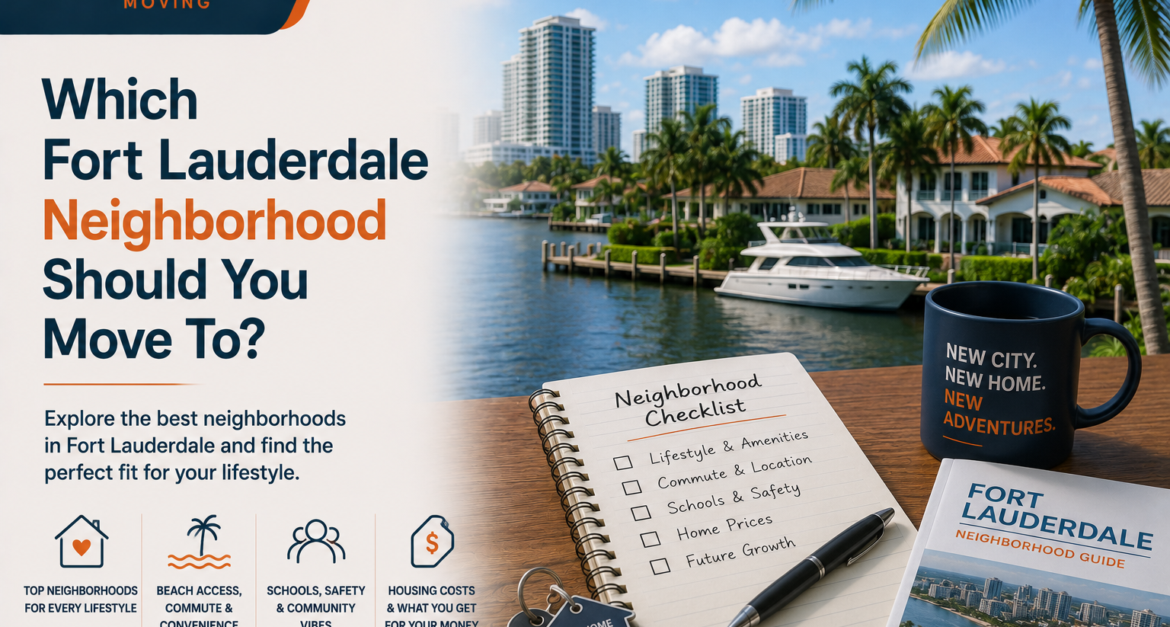
Fort Lauderdale gets lumped together in a lot of relocation searches, but the city covers a wide range of lifestyles inside a fairly small footprint. Someone moving into a Las Olas high-rise and someone moving into a single-family home in Plantation are having almost entirely different experiences of “living in Fort Lauderdale,” even though both addresses fall under the same city services and area code. If you are relocating here and trying to figure out where to land, here is an honest comparison broken down by what actually differs.
Downtown and Las Olas: Walkable, Waterfront, and Priced Accordingly
Las Olas Boulevard is the closest thing Fort Lauderdale has to a signature address. It is walkable, dense with restaurants and boutiques, and close to the beach without being directly on it. The surrounding isles, the finger-island neighborhoods that branch off the main waterway, are where a lot of the city’s waterfront single-family homes sit, many with private docks.
This is also the most expensive part of the city by a wide margin. High-rise condo living here means monthly HOA fees on top of rent or mortgage, and most buildings have specific rules around move-in elevator reservations, certificates of insurance for movers, and move-in time windows. If you are drawn to Las Olas for the lifestyle, budget for the building fees as carefully as you budget for the address itself.
Victoria Park and Flagler Village: Walkable Without Full Beachfront Pricing
If Las Olas is the polished version of downtown living, Victoria Park and Flagler Village are the version one step removed, still walkable, still close to downtown, but without the full waterfront premium. Flagler Village in particular has seen a wave of newer mid-rise apartment development and leans younger, with a mix of breweries, galleries, and coworking spaces mixed into what used to be a more industrial pocket of the city.
Victoria Park is more residential, a mix of bungalows and townhomes a short walk or bike ride from downtown, popular with people who want walkability without living in a high-rise. Both neighborhoods put you close enough to Las Olas and the beach to enjoy them regularly without paying to live directly inside them.
Coral Ridge and Harbor Beach: Established, Residential, Closer to the Water
Coral Ridge sits north of downtown and is a more traditional single-family neighborhood, tree-lined streets, larger lots, and a strong sense of permanence compared to the newer condo development downtown. Harbor Beach, south of Las Olas, is a gated waterfront community and one of the more exclusive residential pockets in the city.
Both are good fits for people prioritizing a quieter, more established residential feel over walkable nightlife, while still staying reasonably close to the beach and downtown.
Plantation, Davie, and Coral Springs: More Space, Longer Commute
Move further inland and the calculus shifts. Plantation, Davie, and Coral Springs offer significantly more house for the money, larger lots, newer construction in some pockets, and school districts that draw a lot of families out of the denser coastal neighborhoods. The trade-off is a real one: you are now commuting into downtown or to the beach rather than walking there, and daily life leans more car-dependent.
For people relocating with kids, prioritizing school zones, or simply wanting more physical space than a downtown condo offers, this is usually where the search ends up. It is also generally the more budget-friendly end of Broward County without leaving the county entirely.
IS FORT LAUDERDALE SAFE?
Safety in Fort Lauderdale, like most cities, varies significantly by specific block rather than by neighborhood name alone. Downtown, Las Olas, and the established residential neighborhoods generally see lower crime rates than some pockets further from the water. Before committing to an address, check current crime statistics for that specific street through the Fort Lauderdale Police Department’s public data rather than relying on a neighborhood’s general reputation.
| Neighborhood | Best For | Trade-Off |
|---|---|---|
| Las Olas / Beachfront Isles | Walkability, waterfront lifestyle, dining | Highest cost, HOA fees, building move-in rules |
| Victoria Park / Flagler Village | Walkability without full beachfront pricing | Less waterfront access, newer construction still developing |
| Coral Ridge / Harbor Beach | Established residential feel, proximity to water | Higher cost than inland suburbs |
| Plantation / Davie / Coral Springs | More space, family-friendly, lower cost | Longer commute, more car-dependent |
The Snowbird Effect on Neighborhood Choice
Fort Lauderdale’s population shifts noticeably between roughly September and April, when seasonal residents arrive from the Northeast and the Midwest. This matters more in some neighborhoods than others. Las Olas, the beachfront isles, and downtown see the sharpest seasonal swings in traffic, restaurant wait times, and short-term rental turnover. Plantation, Davie, and the more inland suburbs feel this far less, since they are further removed from the tourist and seasonal-resident corridor.
If you are relocating permanently rather than seasonally, it is worth visiting your target neighborhood during both the winter high season and the summer off-season before committing, since the two versions of the same street can feel meaningfully different. A downtown restaurant that has a forty-five minute wait in February might be half empty in July.
Renting vs. Buying by Neighborhood
The rent-versus-own calculation also shifts by area. Downtown and Las Olas skew heavily toward condo and apartment rentals, with ownership concentrated in the higher-end waterfront properties along the isles. Coral Ridge and Harbor Beach have a more even mix of long-term owners and renters. Plantation, Davie, and Coral Springs are where most of the city’s single-family home ownership market sits, both for young families buying their first home and for people looking to size up from a downtown condo.
If you are unsure whether to rent or buy right away, renting first in a neighborhood you are considering for the long term is a reasonable way to test the commute, the noise level, and the general feel before signing a mortgage.
What to Factor In Before You Choose
Commute matters more here than it might seem on a map. Fort Lauderdale is geographically compact, but traffic patterns during snowbird season, roughly September through April, can turn a short drive into a much longer one. If your job or daily routine keeps you downtown, living downtown removes that variable entirely.
Building type changes your moving logistics too. A high-rise condo move involves elevator reservations, certificates of insurance for your movers, and often a scheduled move-in window set by the building’s management. A single-family home in Plantation or Davie has none of that, but instead means factoring in driveway access and, in some cases, longer walks from the truck to the door. Either way, telling your moving company the building type in advance means they can plan the right crew size and equipment before move day rather than discovering a freight elevator requirement on-site.
Found your Fort Lauderdale neighborhood?
Whatever part of Broward County you are moving into, from a downtown high-rise to a Plantation single-family home, our Fort Lauderdale moving company handles the building-specific logistics so nothing gets discovered on move day. Flat-rate pricing, no surprises at delivery.
Final Thoughts
There is no single “best” Fort Lauderdale neighborhood, the right one depends entirely on whether you are optimizing for walkability, waterfront access, space, or budget. Spend time in the actual neighborhood, not just researching it online, before committing to a lease or a purchase, since the difference between adjacent blocks can be significant here. Once you have picked the address, the moving logistics differ meaningfully between a downtown high-rise and an inland single-family home, so plan accordingly.
Frequently Asked Questions
Las Olas, Victoria Park, and Flagler Village all offer strong walkability to restaurants, shops, and downtown amenities, with Las Olas carrying the highest price premium of the three.
Plantation, Davie, and Coral Springs tend to draw families for their school districts and larger single-family lots compared to the denser downtown condo market.