





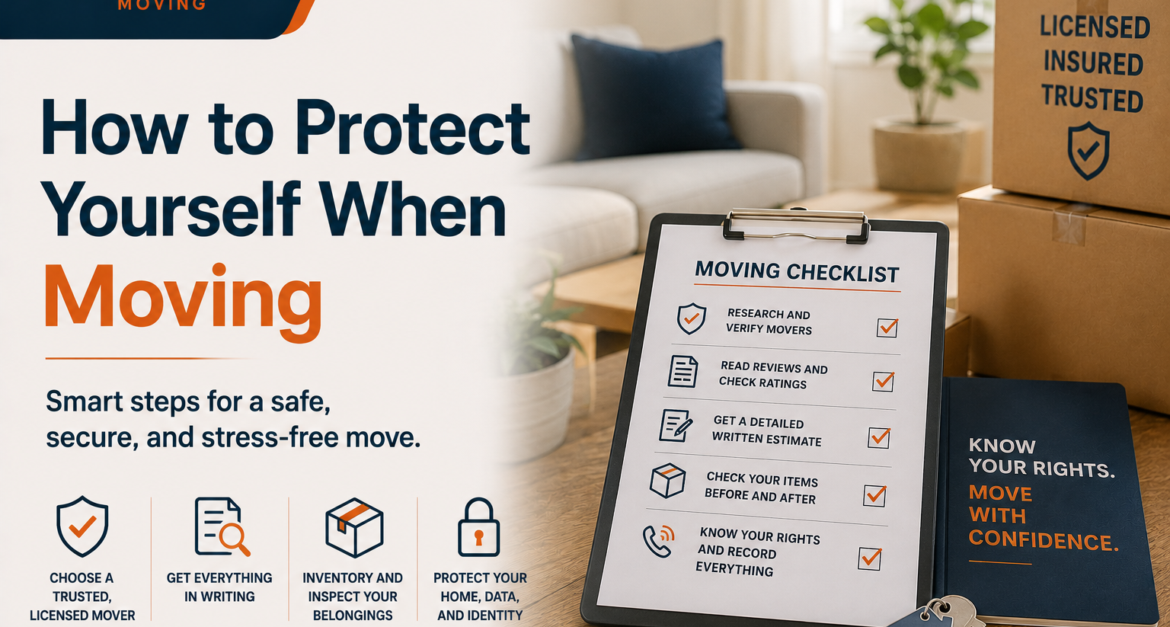
Key takeaways
- Verify a mover’s USDOT number, insurance, and reviews before booking, and avoid large upfront deposits
- Get every estimate, service, and delivery date in writing; never rely on a verbal agreement
- Protect your identity by securing personal documents and limiting what you share with movers
- Use proper lifting technique and keep boxes under 50 pounds to avoid injury on moving day
- Keep valuables and essential documents with you, not on the truck, and prepare for delays with an emergency kit
Relocating can be both exciting and overwhelming. Whether you’re moving across town or across the country, it’s essential to prioritize your safety, physically, financially, and emotionally. The moving industry isn’t immune to scams, delays, identity theft, or accidents. Knowing how to protect yourself when moving can be the difference between a smooth transition and a stressful ordeal. This guide walks you through everything you need to know to stay protected throughout your move, from choosing a reputable mover to securing your valuables, guarding your personal information, and preparing for the unexpected.
Choose a Licensed and Insured Moving Company, and Spot the Red Flags
The first and most important step in protecting yourself when moving is hiring a licensed, insured, and reputable moving company. The moving industry has its share of fly-by-night operations and fraudulent carriers. Before committing to a mover, ask for their USDOT number (for interstate moves), verify their registration with the FMCSA, and check for proper insurance coverage. For a deeper breakdown of exactly what to check on a mover’s federal record, see how to read a mover’s DOT record like an insider.
A reputable mover should provide a detailed written estimate, transparent terms and conditions, and a copy of the “Your Rights and Responsibilities When You Move” booklet published by the FMCSA. Read reviews on third-party platforms like Google, Yelp, and the Better Business Bureau to confirm a solid track record.
Be cautious of quotes that seem too good to be true, and treat a moving company requesting a large upfront deposit as a red flag. Legitimate movers typically expect payment after the job is done, not full payment in advance. If you want to understand exactly how these low-quote schemes work from the inside, our field guide on spotting and stopping a moving scam breaks down the five most common tactics in detail.
Get Everything in Writing
Never rely on verbal agreements. Whether it’s the estimated cost, delivery dates, or specific services promised, make sure everything is documented in a signed contract. Your moving contract should clearly outline the scope of services, estimated costs, pickup and delivery windows, payment terms, and liability coverage. If a company hesitates to put anything in writing, consider it a red flag and read what a moving company can legally charge you so you know which fees are legitimate before you sign anything.
Inventory, Insure, and Protect Your Valuables
Create a detailed inventory of your belongings, room by room. Take photos or videos for added documentation, especially for valuable or fragile items; this is crucial if something gets damaged or lost during the move.
Understand the insurance options available. Most movers offer basic valuation coverage, which may not fully reimburse the value of high-ticket items, so consider full-value protection or third-party moving insurance for added peace of mind.
For your most valuable and irreplaceable items, pack them separately and move them yourself rather than putting them on the truck. Use fireproof and waterproof boxes for electronics and important physical documents, such as birth certificates and wills. Scan important documents (IDs, contracts, financial records) and store digital copies in a cloud service or an encrypted USB drive as a backup. If you’d rather leave the packing itself to professionals, our packing services team handles fragile and high-value items with extra care.
Keep Your Personal Information Secure
Identity theft is a risk most people overlook when moving. Shred documents that no longer hold value, like outdated bank statements or old medical records, before moving day. Update your address with your bank and utility providers promptly so sensitive correspondence doesn’t end up at your old address in someone else’s hands.
When working with a moving service, only share what’s necessary. Avoid disclosing your Social Security number or banking information unless it’s genuinely required.
Prevent Injuries: Lift and Pack Properly
Moving involves real physical strain, and without the right precautions, it’s easy to end up with a back injury, muscle strain, or worse. Lift with your legs, not your back, and use dollies, furniture sliders, or lifting straps for heavy items. Don’t hesitate to ask for help, and wear supportive, closed-toe shoes to avoid slips.
Keep boxes to a manageable weight, no more than about 50 pounds each, and distribute weight evenly inside each box. Label boxes containing heavy items clearly so you or your movers know what to expect before lifting.
Stay Organized and Plan for the Unexpected
Chaos is the enemy of a safe, smooth move. Build a moving checklist covering important dates, documents, contact numbers, and reminders for transferring utilities, updating your address, and arranging childcare or pet care for moving day. Our moving checklist is a good starting point if you want a ready-made one. Keep valuables like jewelry, passports, medications, and financial documents with you, not on the truck.
Plan for contingencies too. What if your new home isn’t ready on time, or delivery is delayed? Having temporary housing or storage options in mind ahead of time removes a lot of stress if plans shift.
It also helps to prepare an emergency box with first-aid supplies, medication, snacks, a phone charger, and spare cash, in case moving day runs into delays or minor mishaps. If you’re moving long-distance, mapping out gas stations, hospitals, and rest stops along your route ahead of time is worth the extra few minutes, and it’s worth reading how flat-rate long-distance movers plan delivery windows so you know what to expect before booking.
Communicate Clearly With Your Movers
Make sure your moving crew understands any special instructions, fragile items, no-stair access, and specific delivery windows before moving day. Be available to answer questions, and don’t hesitate to reach out to your move coordinator for clarification.
Final Thoughts
Moving doesn’t have to come with unnecessary stress or risk. Choosing a legitimate mover, getting agreements in writing, protecting your valuables and personal information, lifting safely, staying organized, and preparing for the unexpected all add up to a smoother, safer relocation. A little planning ahead goes a long way toward starting your next chapter on the right note.
Frequently Asked Questions
Check the mover’s USDOT number, verify their insurance, read online reviews, and request a written estimate. Avoid companies that ask for large cash deposits upfront or only offer vague pricing.
Common moving scams include bait-and-switch pricing, hidden fees, holding belongings hostage until additional payment is made, and requiring large upfront deposits. Always verify a mover’s credentials before hiring.
Important documents, valuable items, personal electronics, jewelry, medications, and daily essentials should always travel with you, not on the moving truck.
Use a secure lock box and transport valuables yourself rather than shipping them with the rest of your belongings. Create an inventory list and take photos for insurance purposes.
Use proper lifting techniques, wear supportive shoes, and use dollies or furniture sliders for heavy items. For anything particularly heavy or awkward, hiring professional movers to handle it is the safer choice.
Planning a move?
Safeway Moving protects your move with flat-rate pricing, licensed carriers, and real-time inventory tracking, so nothing gets lost, damaged, or left to chance.