





Key takeaways
- A shuttle truck bridges the gap between a long-haul moving trailer and homes it can’t safely access
- Common reasons a shuttle is needed include low-hanging trees, low bridges, narrow streets, steep roads, and lack of parking or turnaround space
- Moving vans are different from standard freight 18-wheelers, built specifically for household goods rather than pallet freight
- Shuttle service sometimes adds cost, but Safeway discloses this upfront, never as a surprise charge at delivery
- Safeway plans for shuttle needs in advance using mapping tools and satellite images, so there are no last-minute surprises
Long-distance moves already come with a lot to manage. So when your moving coordinator mentions that a shuttle truck might be needed at delivery, it’s natural to wonder whether this is an extra step or, worse, an extra cost you weren’t expecting. Why can’t the big truck just pull up to your front door? What is a shuttle truck, exactly? These are fair questions, and we’re here to answer them in plain language, no trucking jargon, just the facts with some real-world examples.
What Is a Shuttle Truck?
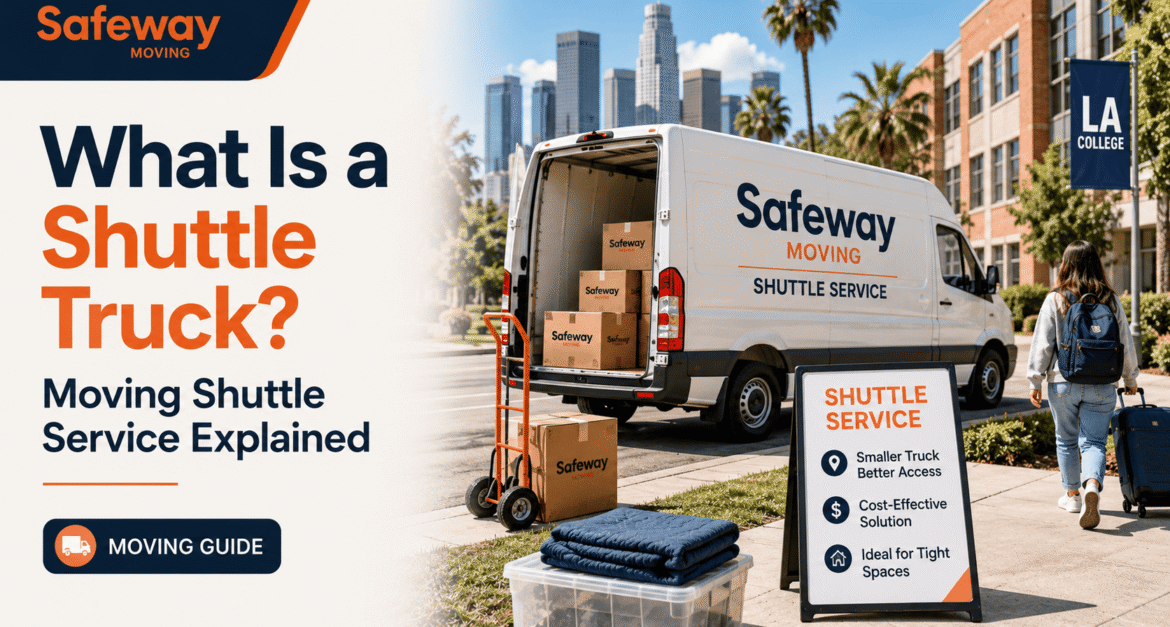
A shuttle truck is a smaller moving truck that bridges the gap between the main long-haul trailer, the one that travels cross-country, and your front door. Sometimes the large trailer we use for long-distance moves can’t physically access your home, whether that’s because of tight roads, low-hanging trees, or simply a lack of space to park. In those cases, we transfer your items from the long-haul truck to a smaller shuttle, which can safely complete the delivery.
Think of it like taking a smaller boat from a cruise ship to shore. It’s not an extra step because we want one; it’s the only safe, practical way to reach your destination.
Why Can’t the Big Truck Just Come to My House?
This is a fair question, and the honest answer is: sometimes it simply can’t. Here are the real-world challenges that can prevent a long-distance trailer from accessing a home directly.
Low-Hanging Trees: Tree branches that stretch over the road might be no issue for your SUV, but they can be a serious hazard for a tall moving trailer. These trucks can be over 13 feet tall, and even one low-hanging limb can cause scratches, dents, or worse.
Low Bridges or Overpasses: Some areas, especially older cities or rural towns, have bridges too low for a large trailer to pass under safely. We can’t risk hitting a bridge; it’s a danger to the truck and everything inside it.
Steep or Winding Roads: Mountainous terrain or twisty neighborhood roads make maneuvering a 70-foot vehicle nearly impossible. The truck’s length, weight, and turning radius simply aren’t built for it.
Narrow Streets and Tight Turns: Many residential neighborhoods, especially in urban areas, weren’t built with large trailers in mind. Even if the truck could get in, it might block driveways, mailboxes, or traffic, or worse, damage property.
No Parking or Turnaround Space: A fully loaded tractor-trailer needs ample space, and cul-de-sacs, dead ends, or busy city streets often don’t provide enough room to park or back out safely.
In all of these situations, using a shuttle isn’t just practical; it’s necessary to protect your belongings, your neighborhood, and the truck itself.
What's the Difference Between an 18-Wheeler and a Moving Van?
This part confuses a lot of people, and understandably so. Most people picture all large trucks as the same, but in the moving world, not all big trucks are built alike.
| Feature | Standard Freight 18-Wheeler | Safeway Moving Van |
|---|---|---|
| Built for | Pallets of freight | Household furniture and boxes |
| Floor height | High off the ground, steep ramps | Lower floor, easier and safer loading |
| Interior | Not padded, not climate-controlled | Fully padded walls, straps, air ride suspension |
| Access needed | Often requires a forklift or loading dock | Hand-carried, no dock required |
| Length | Varies, often longer | Up to 53 feet, tailored for residential access |
So while both are large trucks, our moving vans are purpose-built to keep your belongings safe, clean, and intact during long-distance transport, not designed around pallet freight.
Does Using a Shuttle Cost Extra?
Sometimes, yes, but it isn’t about hidden fees or surprise charges. The shuttle process involves renting a second, smaller truck, paying for additional labor to transfer your items, and extra time and fuel. A driver often spends around 7 hours completing a shuttle move, from parking and locating a rental truck to carefully unloading and reloading everything into the shuttle, plus parking the original tractor-trailer while the shuttle completes delivery.
Our commitment on shuttle costs
If we anticipate needing a shuttle, we let you know as early as possible, explain why, and go over any associated costs before anything is confirmed. No surprises, just clear communication. With Safeway, your final cost for a shuttle is often 25 to 40 percent lower than using another moving company.
What Happens During a Shuttle Move?
If a shuttle is required, here’s how the process works:
- The main moving truck parks in a nearby accessible location, such as a large parking lot or a wide street where it’s safe and legal to unload
- Your belongings are carefully and securely transferred to the shuttle truck, using the same care used during the original packing. Nothing is rushed; every item is still wrapped, padded, and handled by our professional crew
- The shuttle drives the final distance to your front door. Once it arrives, we unload your belongings the same way we would if the original truck had made it all the way, placing items where you want them and checking that nothing is missing or damaged
It’s the same service you’d otherwise receive, just with one extra step to safely get your things where they need to go.
Why Safeway Plans Ahead for Shuttle Needs?
One of the biggest advantages of working with Safeway Moving is that we don’t wait until the last minute to figure this out. Our team conducts research up front, using mapping tools, driver feedback, and years of experience to anticipate when a shuttle might be needed. We ask the right questions about your delivery address, check satellite imagery, and confirm local access restrictions to avoid last-minute surprises.
If there’s any chance the main truck can’t make it all the way, we’ll let you know well in advance and walk you through the plan.
Planning a long-distance move?
Safeway Moving identifies potential shuttle needs before your move date, with all costs disclosed upfront. No last-minute surprises at delivery.
Final Thoughts
Moving is a big deal, your home is full of things that matter, and you want the process to go smoothly. A shuttle truck might sound like an inconvenience at first, but it’s actually one of the ways we make sure your move goes off without a hitch. It isn’t a complication, it’s a solution, one of the ways we safely navigate tricky roads, tight spaces, and unexpected obstacles so your belongings arrive safe and sound at your new front door. If you have questions about your delivery address or whether a shuttle might be necessary for your move, our team is here to help.
Frequently Asked Questions
A shuttle truck is a smaller vehicle used to complete a delivery when the main long-haul moving trailer can’t safely reach a home due to road, bridge, or space restrictions.
Common reasons include low-hanging trees, low bridges, narrow or winding streets, and a lack of parking or turnaround space for a large trailer.
Sometimes, since it involves renting a second truck and additional labor and time. Safeway discloses any shuttle-related cost upfront before it’s confirmed, and our shuttle pricing runs 25 to 40 percent below many other movers.
Yes. Safeway uses mapping tools, satellite images, and driver experience to anticipate shuttle needs ahead of your move date, so you’re informed well before delivery day.
No. Items are transferred to the shuttle with the same padding, wrapping, and professional handling used throughout the rest of your move.